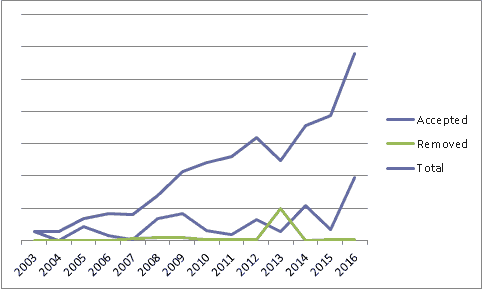
Quite a month compared to January:

As previously posted, Getty launched their new subscription site thinkstock and closed stockxpert.

Shutterstock reached 10 million images, at this rate that's going to double to 20 million images in less than 2 years.

Also this Month:

Fotolia officially announced the launch of the Microstock Photo Plugin for WordPress. Bloggers can download the plugin to simplify the process of buying and inserting fotolia images into their blog posts. New fotolia users can receive 5 free credits when they register, bloggers can also optionally earn affiliate revenue when a visitor buys an image from fotolia after clicking on it in their blog.

Isyndica announced a range of updates including a spell checker, support for moneybookers, alamy and discounted yearly subscriptions. The updates also included a "leaderboard" which compares your best selling agencies to those across the rest of the isyndica users. Right now my istock sales look a little atypical!

isyndica leaderboard


lookstat published a useful microstock guide, written as an introduction to microstock for RF (macro) and RM photographers. It includes some statistics, advice and checklists that are still useful for microstock photographers who already know the ropes.

shutterstock launched a "facebook connect' app to provide a service similar to their shuttertweet feature. As a bonus you also earn an affiliate royalty on sales made of your images if people buy them after seeing them in your feed. If you want to announce your sales and uploads to your facebook friends there are instructions on your shutterstock account page.

fotolia also launched flixtime.com a service similar to animoto.com that allows you to upload your own photos and videos to create a dynamic video presentation, users of flixtime can also choose free stock images from a media lounge and also sign-up to fotolia to obtain three free photos from the fotolia collection and discounts on future purchases.

Deposit photos started a free trial subscription where (potential) buyers can download up to 140 images free of charge. Photographers are paid for each download as though the images were being charged for. I also had my first sale at deposit photos - still early days there...


A couple of days ago the counter at the top of the shutterstock website ticked over to 10,000,000 images - well actually that could be better described as "shot past 10 million at an astonishing rate". There are currently about 100k new images accepted each week. Only about 40% of uploads are high enough quality to pass shutterstock review process.

 Shutterstock 10 million images

The milestone image was uploaded by Canadian photographer Matthew Jacques and can be seen here.


After yesterday unveiling thinkstockphotos (announced late last year as the 'new Getty subscription site') Getty have announced that Stockxpert will close with almost immediate effect.


Stockxpert Buyers

Credits are no longer being sold on stockxpert, nor can new buyers register. Those with existing credits on SXP can transfer them on a 1:1 basis for credits on istockphoto.


Veer have announced some exciting plans to integrate their marketplace microstock collection with the rest of their website making the marketplace "front and center" in their search results. Veer marketplace currently resides in a separate tab on veer.com, and results are displayed in a separate sidebar along with the main search.

The changes (planned for Q2) will include a new interface and also see the removal of veers Rights Managed collection to a new site (yet to be announced) which will target "more traditional and sophisticated customers".

Veer also promise to "substantially increase our marketing activities to spread the word about our simple web site and affordable offering to a much bigger audience" once the changes have been implemented.


Less than a week in yet that hang-over seems so long ago! I submitted 170 images last year, that's nothing like the number I was planning 12 months ago, that's despite upload being easier than ever. Thinking back 12 months and things felt very different, as I'm sure they will in 12 months time. Good news being that my earnings are up.


Slightly longer than usual since my last news digest - it's slow on news over the holidays...

Fotolia launched a 'tax centre' in their account control panel, all contributors are required to complete tax forms before payments are made. This practice is in line with shutterstock and veer. For individuals in many countries it's a reasonably simple process of reading some documentation and filling out a form online. Contributors have until January 1 2010 to complete their forms.

Veer introduced 10,000 USD customer protection to images purchased in their marketplace.


A couple of days ago there was a post on the lookstat blog titled top search keywords for energy, it compared search terms in Google in an attempt to estimate popularity of energy images on microstock sites. Earlier this year I did something similar in a post about seasonal stock images, and at the time I made the point that I wasn't exactly sure how well Google search terms related to searches on microstock sites.

So that set me thinking... (yes, be very afraid) Just exactly how much of a match is google trends/adwords data to what people are searching for at microstock sites? Clearly there will be some relationship, but I'd also guess that there are lots of popular terms that will not have a proportionate number of microstock searches. It's difficult to know how similar the two are. Is it reasonable to assume that popular keywords in Google are more likely to lead to more microstock sales as those keywords make popular subjects hence there will be related businesses in need of such images? As they say "assume makes an ass out of u and me".


Microstock agency Pixmac have announced that they are now reselling Dreamstime images and have added a new 'luxury' collection of macrostock priced content from image source. This in addition to their own microstock collection, celebrity images and reselling of images from Fotolia.

The site now features a series of tabs that allows buyers to easily select from the various collections.


Fotolia have announced the launch of their 'operation level ground' to attract new photographers. The program is open to both existing contributors at other microstock agencies (e.g. quit your istock exclusivity and come join us) and also to photographers who are currently outside of microstock selling their work elsewhere i.e. macrostock prices.


Coinciding with iSyndica's announcement of the official launch of their 'promotion service' I thought it was time to share a few preliminary results of my investigation into promotion with 'free stock photos'. Even before I wrote the article microstock photos for free I've had been redistributing some of my images for free on various websites with somewhat inconclusive results.

The following table shows the sites I have uploaded images to, the number of images, image views recorded by those sites and the number of times someone clicked a link to my website. Measurements for the first 4 weeks of September 2009.